
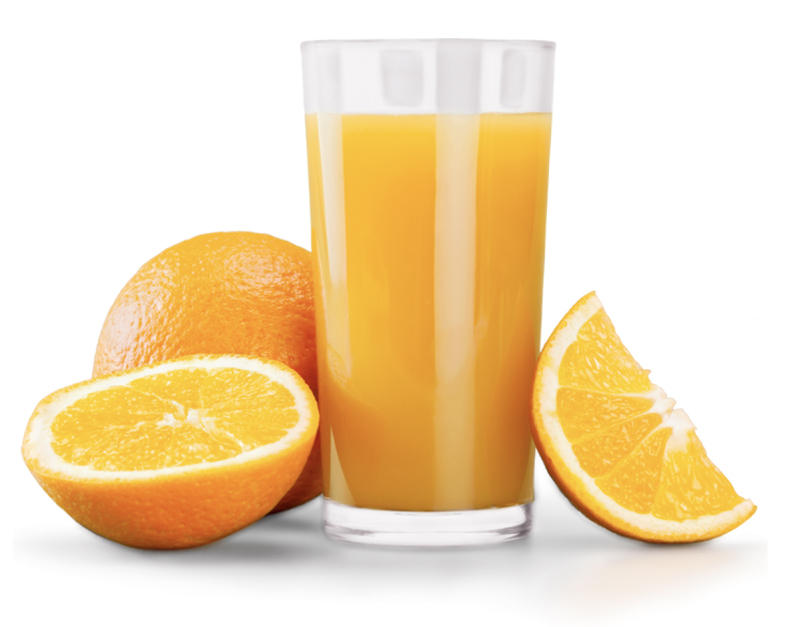
Imagine a package of orange juice with 100% fruit content. It looks convenient and healthy. We drink a glass of juice in seconds and it feels like we've done something good for ourselves and our children.
However, this is not the case. For approximately 200 ml of orange juice, we need to squeeze four to six oranges. Instead of a whole fruit, we get a liquid with very little fiber and a high proportion of free sugars. Juice with 100% fruit content does contribute to the intake of important vitamins, but it also means a high intake of sugars that provide energy, but not a feeling of satiety.
Orange juice is just one of many examples where the appearance and labels on packaging can convince us that it's a healthy choice. Similarly, our shopping carts often end up with fruit yogurts instead of plain ones, sweetened cereals instead of whole grain, or snacks that, despite their "healthy" appearance, contain high amounts of sugar, salt, or fats.
Food shopping is not a neutral act. Every choice in the store affects what we eat at home, how full we feel, and what eating habits we develop in the long term. This is especially true for families with children, where adult decisions are an important part of setting an example.
How to Read Labels
On store shelves, we encounter an extensive range of foods with very similar content, but they can differ significantly in composition. That's why reading labels is one of the most important tools when choosing foods.
Ingredients are listed on the packaging in descending order according to their mass proportion in the product. This means that the ingredient listed first is present in the largest quantity. If sugar (or its synonyms, such as glucose-fructose syrup, sucrose, dextrose, maltodextrin, etc.) is among the first ingredients, this indicates a high proportion of added sugar and consequently a less favorable nutritional composition for regular consumption.
An important part of the label is also the nutrition facts table, which is mandatory for most pre-packaged foods and provides data per 100 g or 100 ml of product (and often also per serving). This shows the energy value and the content of fats, carbohydrates, sugars, proteins, and salt.
Nutrition Traffic Light as a Tool for Assessing Nutritional Composition
To make it easier to navigate the abundance of data on labels, a nutrition traffic light is often used to assess nutritional composition. This is a visual marking system that uses colors to enable a quick assessment of the content of key nutrients per 100 g or 100 ml of food or beverage.
The system is based on color coding of nutrients that should be limited in the diet: sugars, fats, saturated fats, and salt. The colors tell the consumer at a glance the level of suitability of the food for regular consumption:
🟢 Green – low content; the food is suitable for frequent, daily consumption.
🟡 Yellow – medium content; moderation is recommended regarding quantity and frequency
🔴 Red – high content; the food is recommended to be consumed only occasionally and in smaller quantities.
The nutrition traffic light enables quick assessment of the nutritional composition of foods per 100 g Source: ZPS
When assessing nutritional composition, it also makes sense to consider the content of dietary fiber as an indicator of nutritional quality, where higher content generally means a more favorable choice.
Such color classification is generally not displayed directly on food labels. Only numerical values of nutrients are listed on the packaging, so for proper assessment, it is useful to know the threshold values that determine whether the content of a particular nutrient is low, medium, or high. In practice, this means it's good to memorize these reference values or save them in an accessible place as a framework when comparing products.
For consumers who want a quick and clear assessment, digital tools are also available, such as the free mobile application Veš, kaj ješ (Know What You Eat), which displays the nutrition traffic light in visual form.
Veš kaj ješ Mobile Application
For easier use of the nutrition traffic light in practice, consumers in Slovenia have access to the free mobile application Veš, kaj ješ (Know What You Eat), which enables simple and clear use of the nutrition traffic light system when choosing and comparing foods in stores. Using the application does not require special nutritional knowledge, so it is suitable for a wide range of consumers.
The application enables quick scanning of a product's barcode and a color assessment of its nutritional composition. In this way, it makes it easier for consumers to decide between similar products while also encouraging a better understanding of the composition of foods they encounter during daily shopping.
According to the latest data (October 2025), the application contains data on more than 65,000 foods, has been downloaded by more than 75,000 users, and is actively used by around 35,000 people [1]. This shows that it is an established and frequently used tool that can significantly contribute to more informed dietary decisions.
Food Labeling with the Nutri-Score Scheme
The European Union has been discussing the introduction of a unified mandatory front-of-pack nutrition labeling system in recent years, but as of February 2026, a mandatory harmonized scheme has not been adopted due to opposition from some countries and stakeholders [2].
Among the most recognizable voluntary systems is Nutri-Score – a simple color-letter scale from A (dark green, most favorable choice in the group) to E (red, less favorable). The system balances negative components (energy, sugars, saturated fats, salt) with positive ones (fiber, proteins, fruits, vegetables, legumes) and enables quick comparison of similar products without detailed reading of labels.
It is important to emphasize that a favorable score of A or B does not necessarily mean that the food is healthy in a broader nutritional sense, but rather that it has a more favorable nutritional composition compared to other products in the same category. Therefore, even some industrially processed or sweetened products (e.g., certain grain cereals) can achieve a high score if they contain less sugar or more fiber than comparable products [2].
In Slovenia, Nutri-Score appears mainly on imported products or voluntarily with some manufacturers and retailers, while in countries such as France, Belgium, Germany, the Netherlands, Spain, and Switzerland, it is already widely established.
Research by Slovenian authors shows that Nutri-Score enables faster decisions under time pressure, but for encouraging healthy choices in Slovenia, the nutrition traffic light from the Veš, kaj ješ application is even more effective, which confirms the importance of labels that are familiar and understandable to consumers [3].
In Conclusion....
Labels on packaging and mobile applications, such as Veš, kaj ješ, can significantly facilitate our choice of foods with more favorable nutritional composition. With regular use of such tools, we gradually learn to recognize better products, which in the long term is reflected in better health and higher quality nutrition. At the same time, the basis of shopping should remain simple: as much fresh fruit and vegetables as possible, which represent the foundation of a healthy diet and can be included in all daily meals without guilt.
References:
- ZPS. Veš kaj ješ. [cited 2026 7.2].
- Julia, C., et al., Ten years of Nutri-Score front-of-pack nutrition labelling in Europe. Nat Food, 2025. 6(3): p. 239-243.
- Hafner, E., et al., From perception to preference: Insights on front-of-package nutrition labelling effectiveness from a choice experiment under time-pressure. Food Quality and Preference, 2026. 136: p. 105765.