
Vitamin D is important for bone and muscle health and for the normal functioning of the immune system. Its role is also being studied in various neurological diseases, diabetes, and certain types of cancer, which further emphasizes the importance of adequate supply. We obtain it primarily through synthesis in the skin upon exposure to UVB sun rays and to a lesser extent through diet. In our geographical environment, dependence on the sun is the main limitation – during winter months (October–April), synthesis in the skin is practically impossible.
In early December, the National Institute of Public Health (NIJZ) published the first national guidelines for adequate vitamin D supply for all population groups. The key message of the guidelines is clear: vitamin D deficiency is very widespread in our country and requires a systematic yet sensible public health approach.
National data show that more than half of adults and nearly two-thirds of older adults in Slovenia have vitamin D levels below 50 nmol/L, which indicates deficiency. In approximately one-quarter of the population, values are even below 30 nmol/L, which we classify as severe deficiency. During the winter period, the situation is even more pronounced, confirming that this is a widespread phenomenon in the population.
Despite this, the guidelines do not recommend routine laboratory measurement of vitamin D in healthy individuals. The reason for this is not neglecting the problem, but rather the fact that deficiency is very widespread and predictable. The public health approach therefore focuses primarily on preventive vitamin D supplementation for most of the population, rather than systematic testing without clear clinical indication.
Average Vitamin D Content per 100 g of Food
| Food | Average (mcg/100 g of food) |
|---|---|
| salmon | 16 |
| sardine | 11 |
| tuna | 4.5 |
| egg yolk | 3.1 |
| eggs | 2.9 |
| chanterelles | 2.1 |
| button mushroom | 1.9 |
| raw butter | 1.2 |
| Emmental cheese | 1.1 |
| Edam cheese | 0.3 |
| milk 3.5% fat | 0.09 |
| yogurt 1.5% fat | 0.03 |
1 µg of vitamin D is approximately 40 IU.
Recommended Daily Dose
| Population Groups | Recommended Daily Dose |
|---|---|
| 0–1 years | 400 IU |
| 1–13 years | 600–800 IU |
| 13–18 years | 800–1000 IU |
| 18–65 years | 800–1000 IU |
| >65 years | 1000–2000 IU |
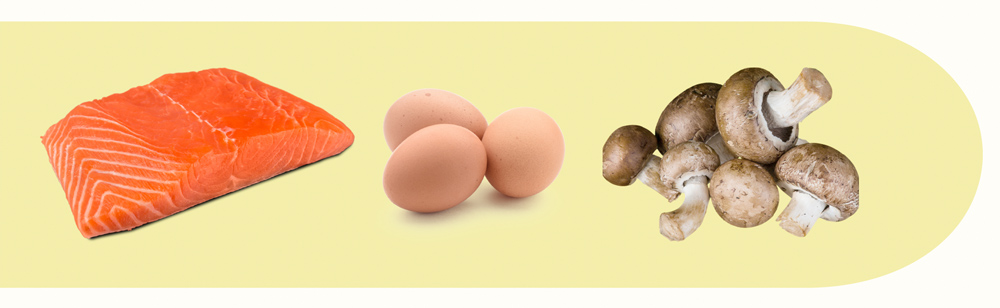
Although vitamin D is found in some foods, primarily in fatty marine fish, eggs, and mushrooms, the average dietary intake in Slovenia is very low – approximately 3 µg per day (120 IU). Even with thoughtful food selection, most people do not achieve the recommended amounts through diet, so the guidelines clearly emphasize that diet alone is generally not sufficient for adequate vitamin D supply.
Vitamin D is available in Slovenia primarily as a dietary supplement, and in cases of proven severe deficiency, also as a prescription medication. Excessive vitamin D intake is rare and typically occurs only with long-term use of very high doses; the upper safe limit for adults is 4000 IU per day.
The guidelines give preference to vitamin D3 for preventive supplementation, as it is more effective than vitamin D2 in achieving and maintaining adequate vitamin D levels in the body. Recommendations differ according to age groups. It is emphasized that regular daily intake is more appropriate than occasional high weekly doses, as it enables more stable vitamin D levels.
[VITAMIN D - summary of guidelines for adequate supply]
<p><a href="/uploads/admin/2026-05/vitamin-d-povzetek-smernic-za-zadostno-preskrbljenost-65cb6efc.pdf" target="_blank" rel="noopener" class="article-pdf-link">📄 vitamin D summary of guidelines for adequate supply (3.7 MB)</a></p>