
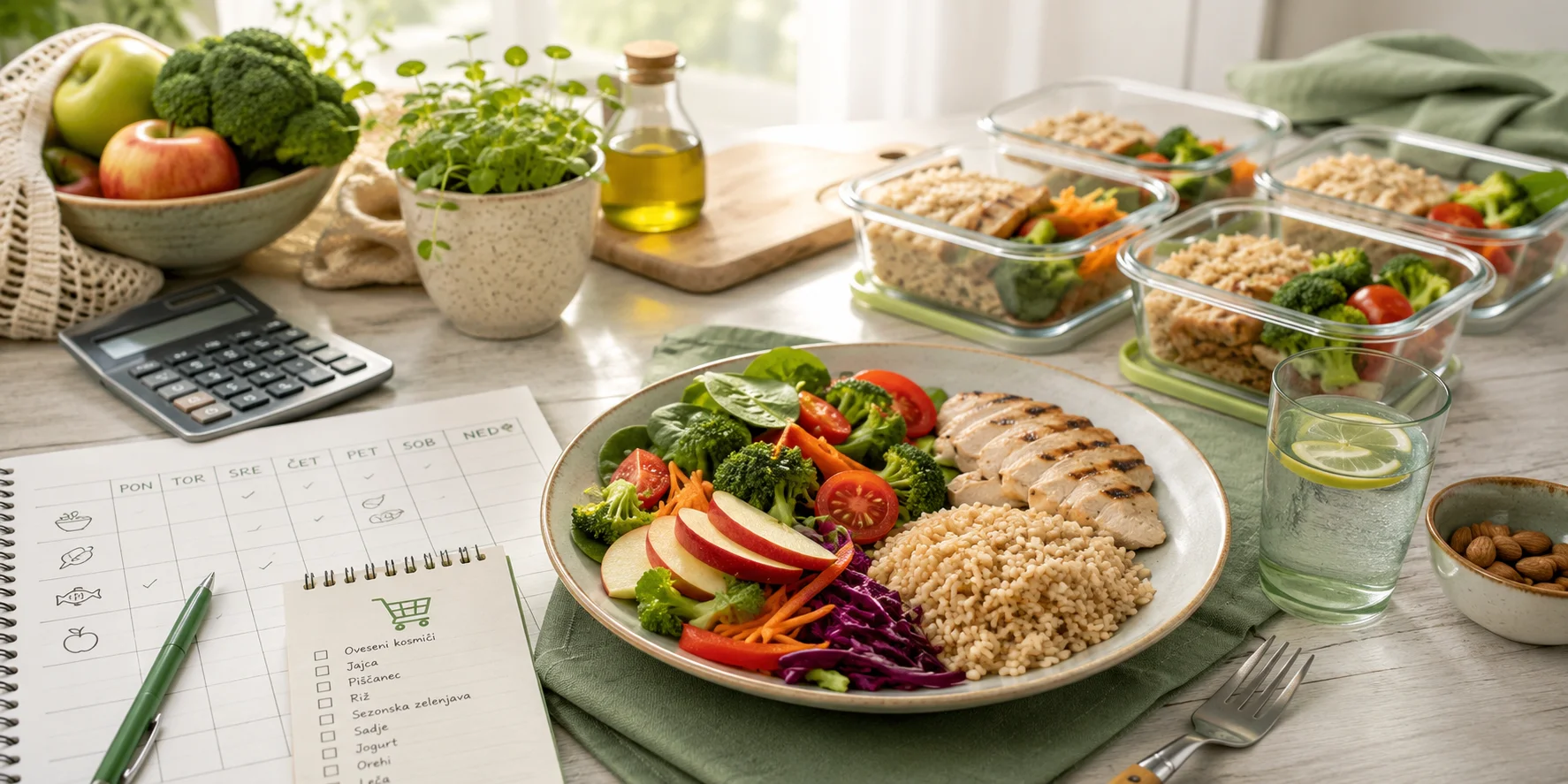
Nutrition is one of the most important foundations of our health. Through it, we provide the body with energy and all the nutrients needed for growth, development, work, learning, and life in general. Despite this, we often pay too little conscious attention to nutrition. This is also confirmed by the results of the latest national research on the dietary habits of Slovenians, which shows that a large part of the population still does not meet recommendations regarding the intake of vegetables, fruits, and other recommended foods [1].
At HFL Institute, we emphasize primarily a balanced and long-term sustainable approach to eating, which should by no means become the central theme of our entire day. Nutrition must support our lives, not control them. However, a basic understanding of how to compose balanced meals and how to organize nutrition in a sustainable way is essential today. Without this, it is difficult to maintain long-term health, higher quality of life, and reduce the risk of numerous chronic diseases [2].
In the following, we will show how, with good nutrition planning, we can create meals that follow dietary guidelines while remaining financially and organizationally sustainable for family life.
Fundamentals of Healthy Nutrition
Despite numerous dietary trends and often contradictory information, the basic principles of healthy nutrition have remained fairly consistent for many years. Most modern dietary guidelines are based on similar starting points: nutrition should be diverse, balanced, and composed of all basic food groups. Reviews of dietary guidelines from different countries show that recommendations align quite well in basic principles, regardless of the cultural or dietary specificities of individual environments [3].
An important part of balanced eating is also a regular meal rhythm, which applies to both children and adults. Research shows that more organized dietary patterns are often associated with better diet quality and a greater likelihood of meeting dietary recommendations [4].
When planning meals, we can use the healthy plate model developed by NIJZ [5]. Based on this, we at HFL Institute have also prepared an attached poster, which, in addition to the ratios on the plate, includes examples of food groups and the recommended frequency of their inclusion in the diet. It is intended for quick orientation when composing main meals.
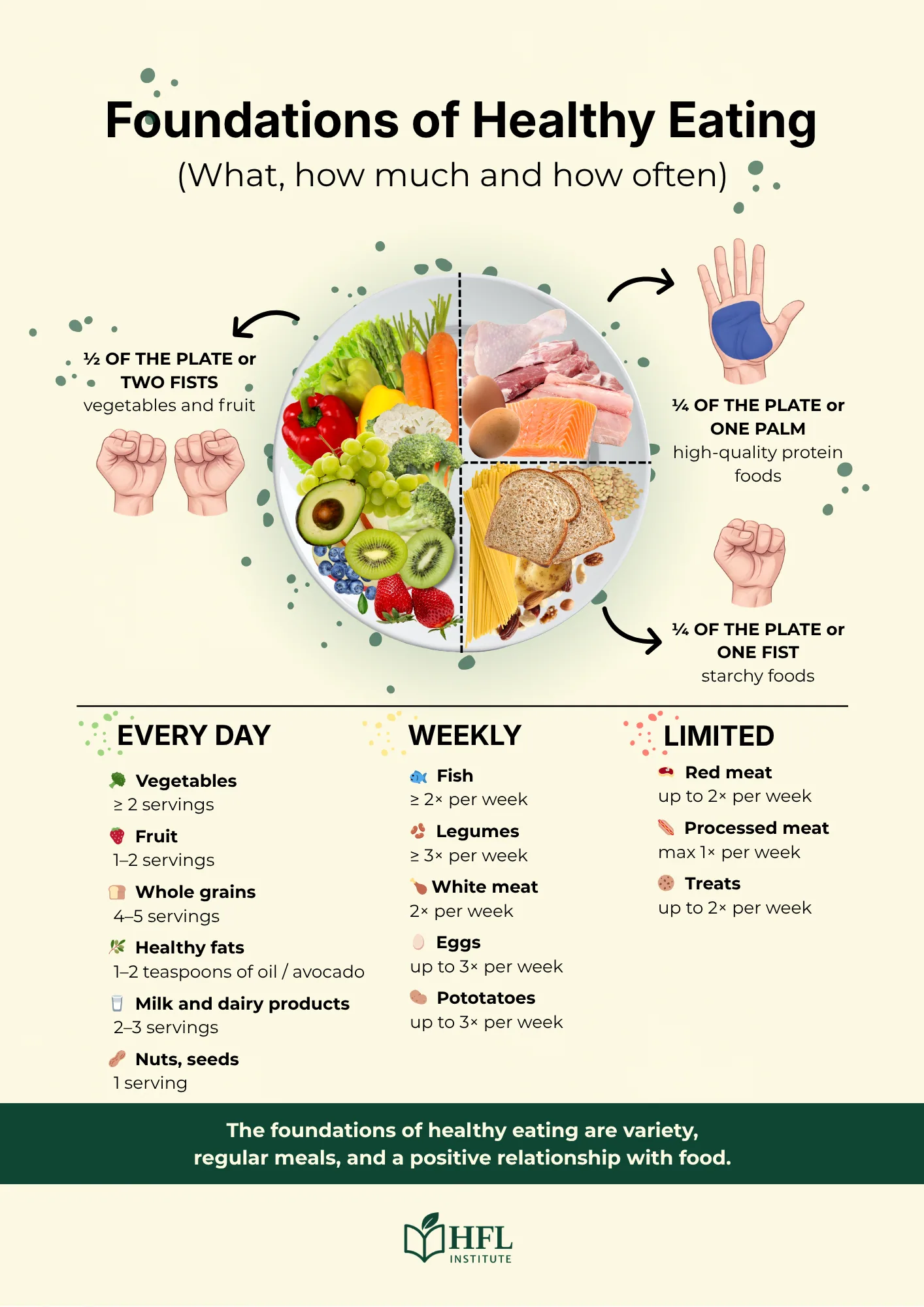
HFL Institute Poster
One Menu, Different Portions
When planning family nutrition, it is most practical to start from the same basic meals for all family members, with mainly quantities being adjusted, and for younger children, texture and preparation method as needed. This approach simplifies planning, facilitates shopping, and reduces the possibility of preparing too much food.
This starting point is also supported by recommendations for feeding children, as a child after completing their first year of age can generally gradually transition to family nutrition [5].
Example of a Daily Menu with Approximate Standards
In practical menu planning, it is important not only which foods we choose, but also what quantities we prepare. The sense of portions affects the total daily energy intake, as well as the amount of food that remains unused. Good quantity planning therefore helps with better shopping organization, fewer unnecessary costs, and more efficient use of food [6, 7].
In practice, a schedule of five daily meals, which includes three main meals and two smaller snack meals, often proves very useful. This type of eating can help reduce spontaneous reaching for energy-rich snacks, which we often don't even recognize as part of a meal, even though they significantly contribute to total daily energy intake. Often, only at the end of the day do we realize that, in addition to main meals, we consumed a cookie, croissant, piece of chocolate, or other small snacks that we easily overlook when assessing our own diet.
Below, we present an example of a daily menu with approximate standards for a child aged 4 to 6 years. The presented standards are based on guidelines for nutrition in educational institutions, which define recommended food quantities for all-day nutrition of children [8].
| Breakfast | Morning Snack | Lunch | Afternoon Snack | Dinner |
|---|---|---|---|---|
| oat porridge with milk (*200g), walnut topping (*5g) with cinnamon (*1g), apple (*50g) | plain yogurt (*150g), banana (*80g) | cauliflower soup (*150g), chicken fillet (*60g), mashed potatoes (*120g), green salad (*50g) | whole grain bread (*40g), chickpea spread (*30g), pickled pepper (*40g) | vegetable omelet (*100g) and tomato salad (*60g) |
- The stated standards represent approximate food quantities for a child aged 4 to 6 years.
The approximate total cost of purchasing food for the presented children's portions is approximately 4–5 EUR per day, as the menu is based mainly on basic, less processed foods. When preparing the same meals for the entire family, the cost per portion often decreases further, as we can buy food in larger packages, take advantage of promotional offers on basic foods, and use individual ingredients in several different meals throughout the week.
Tips for Budget-Friendly Nutrition Planning
The presented daily menu can be a starting point for planning meals several days in advance. It is important that we do not design the menu separately from shopping. First, we check what foods we already have at home, then we prepare a shopping list based on the meals we intend to prepare. This reduces the possibility of unnecessary purchases and makes it easier to use foods that would otherwise remain unused.
When we prepare a menu for several days in advance, it is easier to take advantage of larger packages of basic foods, monitor promotional offers, and use individual ingredients in several different meals. For example, if we use chickpea spread for an afternoon snack, we can include chickpeas in a salad, vegetable stew, or spread for another meal in the same week. Similarly, leftover cooked vegetables can be used in an omelet, soup, or as a side dish the next day.
For quickly perishable foods, such as meat, fish, fresh vegetables, and some dairy products, it is sensible to think about when we will use them when purchasing. If we won't use them in the near future, we can divide them into smaller portions and freeze them. This way, we buy a larger or more affordable package while reducing the possibility that food would remain unused.
Conclusion: Planning That Makes Everyday Life Easier
Planning family nutrition is not about finding the perfect menu, but rather a way to make family nutrition easier. With some advance organization, we can more easily compose balanced meals, reduce the amount of wasted food, and better align dietary guidelines with the family budget.
At HFL Institute, we will continue to prepare content, workshops, and webinars in which we will present various nutritional topics through specific, everyday examples. Follow us on our channels.
References
- gregorič, M., et al., Različni vidiki prehranjevanja prebivalcev Slovenije: v starosti od 3 mesecev do 74 let. 2019: Nacionalni inštitut za javno zdravje.
- Morze, J., et al., Diet Quality as Assessed by the Healthy Eating Index, Alternate Healthy Eating Index, Dietary Approaches to Stop Hypertension Score, and Health Outcomes: A Second Update of a Systematic Review and Meta-Analysis of Cohort Studies. Journal of the Academy of Nutrition and Dietetics, 2020. 120(12): p. 1998-2031.e15.
- Herforth, A., et al., A Global Review of Food-Based Dietary Guidelines. Advances in Nutrition, 2019. 10(4): p. 590-605.
- Leech, R.M., et al., Understanding meal patterns: definitions, methodology and impact on nutrient intake and diet quality. Nutr Res Rev, 2015. 28(1): p. 1-21.
- Fewtrell, M., et al., Complementary Feeding: A Position Paper by the European Society for Paediatric Gastroenterology, Hepatology, and Nutrition (ESPGHAN) Committee on Nutrition. J Pediatr Gastroenterol Nutr, 2017. 64(1): p. 119-132.
- Hollands, G.J., et al., Portion, package or tableware size for changing selection and consumption of food, alcohol and tobacco. Cochrane Database Syst Rev, 2015. 2015(9): p. Cd011045.
- van Rooijen, M.A., et al., Optimizing household food waste: The impact of meal planning, package sizes, and performance indicators. Resources, Conservation and Recycling, 2024. 205: p. 107559.
- ZRSŠ, Smernice za prehranjevanje v vzgojno-izobraževalnih ustanovah. 2024: Ljubljana.