
On April 21, 2026, a news item titled "Advocate for Respecting Religion and Belief in Nutrition in Kindergartens and Schools" was published on the website of the Advocate for the Principle of Equality, presenting recommendations to the Ministry of Education regarding dietary adaptations for children and adolescents [1].
The publication emphasizes that cases allegedly occur in educational institutions (VIZ) where children cannot consume the offered meals due to religious or personal beliefs, and that more attention should be paid to these needs. Particularly notable is Mr. Lobnik's statement that "we must all personally get over not granting something to others simply because we ourselves do not have such a need."
Without broader context, such a statement can create an incomplete picture of how educational institutions operate and the impression that the system is excluding children based on religious or ethical beliefs.
Many schools and kindergartens already adapt nutrition to various children's needs within their capabilities. In this context, the proposed measure of consistent food labeling on menus does not present major organizational burdens and can be implemented relatively quickly in all educational institutions, while other recommendations require substantially broader systemic adaptations.
The Advocate for the Principle of Equality's recommendation stems from the principle of non-discrimination and respect for individual dignity, which is undoubtedly an important starting point. It proposes to the Ministry that the organization of nutrition should take into account the religion or beliefs of children and youth (e.g., veganism) and that these circumstances be treated comparably to adaptations for health reasons [2].
However, such an approach does not fully capture the complexity of organizing school nutrition, as it does not consider the broader framework of educational institutions' operations, which includes important public health, organizational, and financial aspects. The key dilemma is therefore not merely the unwillingness of educational institutions, but primarily the systemic capacity to implement such adaptations.
The purpose of this article is therefore not to deny the importance of religious or ethical beliefs in children's nutrition, but to point out that any additional adaptations must be placed within the realistic staffing, financial, professional, and organizational capabilities of the system.
Complexity of the Organized Nutrition System in Educational Institutions
The organization of nutrition in educational institutions is a complex system in which professional guidelines, legislative frameworks, work organization, food preparation safety, and available human and financial resources intertwine. Decision-making about individual adaptations therefore does not mean a direct decision on whether certain nutrition is enabled or not, but requires coordination of these various aspects that must be simultaneously fulfilled.
When discussing dietary adaptations in educational institutions, it is important to emphasize that Slovenia's school nutrition system is well developed and often highlighted in professional literature as an example of good practice. It has a tradition of over 70 years, a legislatively regulated field, meal subsidization, and professional monitoring [3].
Therefore, it is essential that every additional dietary requirement be evaluated in light of the comprehensive functioning of the system, as a simplified presentation of challenges as merely institutional insensitivity would overlook broader systemic limitations.
Educational institutions organize kitchen operations, employ an appropriate number of workers, include nutrition organizers, implement public procurement procedures, and simultaneously comply with green public procurement requirements and food safety regulations to ensure nutrition. In doing so, they operate within clearly defined staffing and financial frameworks that significantly affect the scope and manner of possible adaptations.
It is important to emphasize that standards for kitchen staff have not been updated for several decades [4, 5], while requirements regarding quality, diversity, and meal adaptation have increased dramatically during this time. Although this development of nutrition is professionally positive, it is not accompanied at the system level by necessary staffing and organizational adjustment measures.
An important part of the limitations is also represented by financial resources for food purchases. In kindergartens, this cost is determined within the program price adopted by the founding municipality. In the City Municipality of Ljubljana, this has been 52 EUR per month per child since 2023 [6], which means approximately 2.45 EUR per day for three to four meals. In primary schools, the price of snacks is determined by the Minister of Education; in the current school year 2025/26, it amounts to 1.10 EUR per student, with this amount including both food and labor costs.
The share of labor costs typically represents between 40 and 50% of the meal value. The price of other meals is determined by the schools themselves, but these prices are not market-based; rather, they are based on actual costs and the principle of social accessibility.
Such a financial framework means that institutions have limited room for additional adaptations, which also applies to dietary foods, as they generally do not receive additional funds for them, but must cover these costs within existing budgets.
Medically Indicated Diets and Dietary Restrictions Due to Religion or Beliefs
Discussion about dietary adaptation in educational institutions also requires a clear distinction between different types of dietary restrictions.
Medically indicated diets such as cow's milk-free, egg-free, wheat-free, tree nut-free diets, and celiac disease diets are directly related to a child's health condition. They are necessary to ensure their health, and in certain cases also to prevent life-threatening conditions (e.g., anaphylactic shock).
Therefore, such diets are prescribed based on medical documentation and are typically supported in nutrition organization by increasing the number of workers for their preparation and stricter food hygiene and safety protocols.
Dietary restrictions arising from religious or ethical beliefs such as halal, kosher, exclusion of pork, or veganism have a different nature. Their implementation in an institutional environment can be organizationally demanding in various ways, especially when it includes special requirements regarding procurement, preparation, or separation of foods. When consuming a regular, balanced meal, they generally do not pose a direct risk to the child's health, as is the case with medically indicated diets.
This does not mean that these needs are not important, but it does mean that they cannot be automatically treated in the same way as medically indicated diets without additional financial resources and appropriate staffing adjustments.
Precisely for this reason, equating them with medically indicated diets raises important professional and organizational questions. If these two types of dietary restrictions are treated equally, this in practice means that educational institutions are expected to provide the same scope of adaptations without ensuring appropriate staffing and financial conditions.
Let's Clarify: Vegan Nutrition for Children
Among dietary restrictions arising from beliefs, which the Advocate for the Principle of Equality specifically highlights, is veganism. Although a well-planned vegan diet can be appropriate for all life stages, including childhood, it is crucial to emphasize that this only applies with careful planning, appropriate supplementation, and good knowledge of replacing key nutrients, while there is also an increased risk of certain micronutrient deficiencies if such a diet is not properly professionally guided [7].
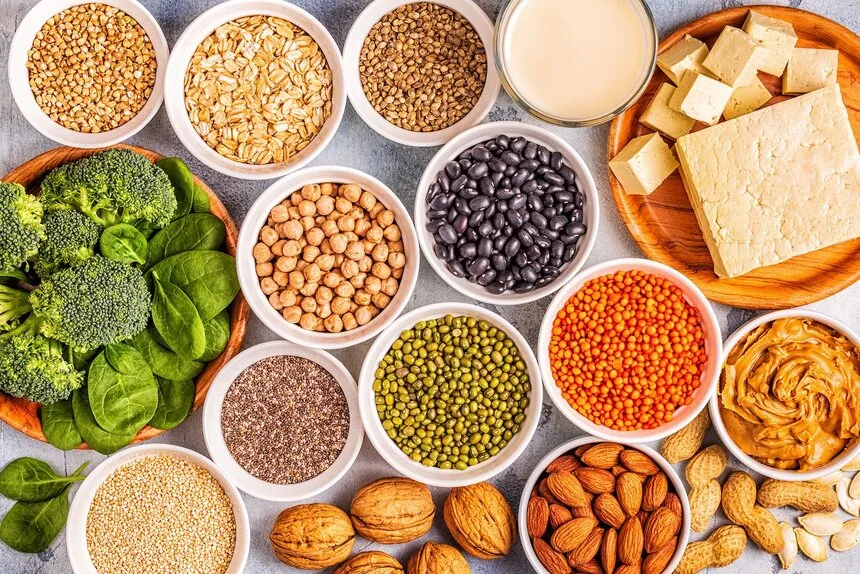
Veganism itself demonstrates the problem of equating it with medical diets. While medically indicated diets are prescribed for vital health reasons and are often supported by precise instructions from a doctor or clinical dietitian, no such formal medical indication exists for a vegan diet. Nevertheless, veganism requires dietetic professional support to ensure meal adequacy and prevent potential deficiencies.
This is not merely about excluding foods of animal origin from the menu, but about actively and professionally planning the replacement of all nutrients that the child would otherwise receive from foods of animal origin (e.g., vitamin B12, iron, calcium, vitamin D, omega-3 fatty acids).
This places educational institutions in a dilemma: can they, within existing staffing and financial frameworks, without additional staff training, specialist dietetic knowledge, and potentially more expensive ingredients, undertake the implementation and monitoring of such a dietary regime in a way that will truly ensure optimal nutrition and health for children? The existing Guidelines for Nutrition in Educational Institutions [8] already recommend a meat-free menu, but a fully adequate vegan diet is a step further and requires an in-depth understanding of nutritional needs and sources that kitchen staff generally do not have without additional training.
Conclusion
Ensuring inclusive school and kindergarten nutrition that respects all religious and ethical beliefs, while also ensuring professional appropriateness and safety for children's health, requires a systemic solution. Such a solution must include not only recommendations, but also concrete staffing, financial, and professional support for institutions.
Without this, increasing the scope of dietary adaptations for individuals can lead to staff overload, reduced control over meal quality, and increased risk of errors in food preparation.
Only with a comprehensive approach is it possible to truly realize the principle of equal treatment while simultaneously maintaining high public health standards and relieving educational institutions of insurmountable challenges.
References
- Zagovornik, N.E., Zagovornik za upoštevanje vere in prepričanja pri prehrani v vrtcih in šolah [sporočilo za javnost]. 2026: https://zagovornik.si/zagovornik-za-upostevanje-vere-in-prepricanja-pri-prehrani-v-vrtcih-in-solah/.
- Zagovornik, N.E., Priporočilo Zagovornika načela enakosti glede prehrane v vzgoji in izobraževanju ob upoštevanju vere ali prepričanj otrok in mladih. 2026, Zagovornik načela enakosti: https://zagovornik.si/izdelki/priporocilo-zagovornika-nacela-enakosti-glede-prehrane-v-vzgoji-in-izobrazevanju-ob-upostevanju-vere-ali-prepricanj-otrok-in-mladih/.
- Poličnik, R., et al., Šolska prehrana v Sloveniji in v nekaterih evropskih državah. J Anali PAZU, 2021. 11(1-2): p. 16-29.
- MŠŠ, Pravilnik o normativih in kadrovskih pogojih za opravljanje dejavnosti predšolske vzgoje. 2005: Ur.l.RS 75/05.
- MŠŠ, Pravilnik o normativih in standardih za izvajanje programa osnovne šole. 2007: Ur.l.RS št. 57/07.
- MOL, Sklep o določitvi cen programov predšolske vzgoje v javnih vrtcih in dodatnih ugodnosti za starše. 2023: Ur.l.RS 100/23.
- Brits, E. and E. le Grange, Influence of a Vegan Diet on Child Health and Development: A Scoping Review. Nutrition Reviews, 2026. 84(4): p. 873-898.
- ZRSŠ, Smernice za prehranjevanje v vzgojno-izobraževalnih ustanovah. 2024: Ljubljana.