It may seem self-evident to us that in Slovenia, nutrition for children in educational institutions is systematically provided. However, this is not common practice in many countries – both near and far.
In our country, all children enrolled in kindergartens and schools, regardless of their socio-economic status, have access to balanced and quality nutrition that must, in accordance with the School Nutrition Act [1], support their growth and development.
The school nutrition system therefore plays an important public health role. It not only ensures regular meals but also enables children to experience diverse, balanced nutrition and significantly contributes to the formation of dietary habits that can affect health even in adulthood.
Posts about school nutrition often trigger strong emotions.
Parents' concern for their children's well-being is completely understandable, but with such posts, we too often stop at one photograph or one meal, torn from the broader system of organized school nutrition.
Such a simplified view often has a more negative than constructive tone and in doing so overlooks the people who care for children's nutrition daily: cooks and their assistants, school nutrition organizers, teaching staff, and institutional management who, within the given conditions, ensure balanced and quality nutrition for children.
THE SCHOOL NUTRITION SYSTEM IN SLOVENIA
How do we assess the quality of school nutrition? In professional nutrition evaluation, we never judge an individual meal, nor even a full-day menu. A photograph of one sandwich or plate therefore cannot give us a realistic picture. We only get this with an analysis of the weekly, or even better monthly, offering, which shows whether the nutrition meets children's dietary needs and contributes to the development of healthy eating habits.
Therefore, kindergartens and schools that consistently follow nutritional guidelines are not merely part of a support system but carry one of the key roles in protecting children's health and forming dietary habits that will accompany them into adulthood.
A LARGE PART OF THE RESPONSIBILITY FOR CHILDREN'S NUTRITION HAS BEEN TRANSFERRED TO KINDERGARTENS AND SCHOOLS
In kindergartens and schools, children usually receive two to four meals daily, with each meal having its clearly defined role. The guidelines very precisely specify what proportion of daily energy needs each meal should cover, so an individual meal must be assessed within the framework of the entire daily nutrition plan.
When planning meals, schools and kindergartens must consider clearly defined professional foundations. The basis is compliance with the Guidelines for Nutrition in Educational Institutions [2], which are based on scientific findings about the impact of nutrition on children's health and the formation of dietary habits.
Children in kindergartens and schools spend a large part of the day there, often between 6 and 9 hours. This means that during this time they consume up to half or even three-quarters of their daily energy and nutritional needs.
Let's be honest, due to the modern pace of life, we as parents often don't have the time, energy, or opportunity to prepare diverse and cooked meals for children every day. With this realization, it quickly becomes clear how important a role organized nutrition in kindergartens and schools plays and how large a part of the responsibility for a child's nutrition is actually transferred to these institutions. School nutrition organizers play a key role in this.
In addition to planning menus, they coordinate the work of kitchen staff daily, collaborate with management and teaching staff, and face numerous very concrete challenges: limited meal prices, public procurement procedures, cooperation with local producers, efforts to reduce food waste, and implementation of activities that promote children's nutritional literacy.
About the school sandwich at the Jezersko branch school
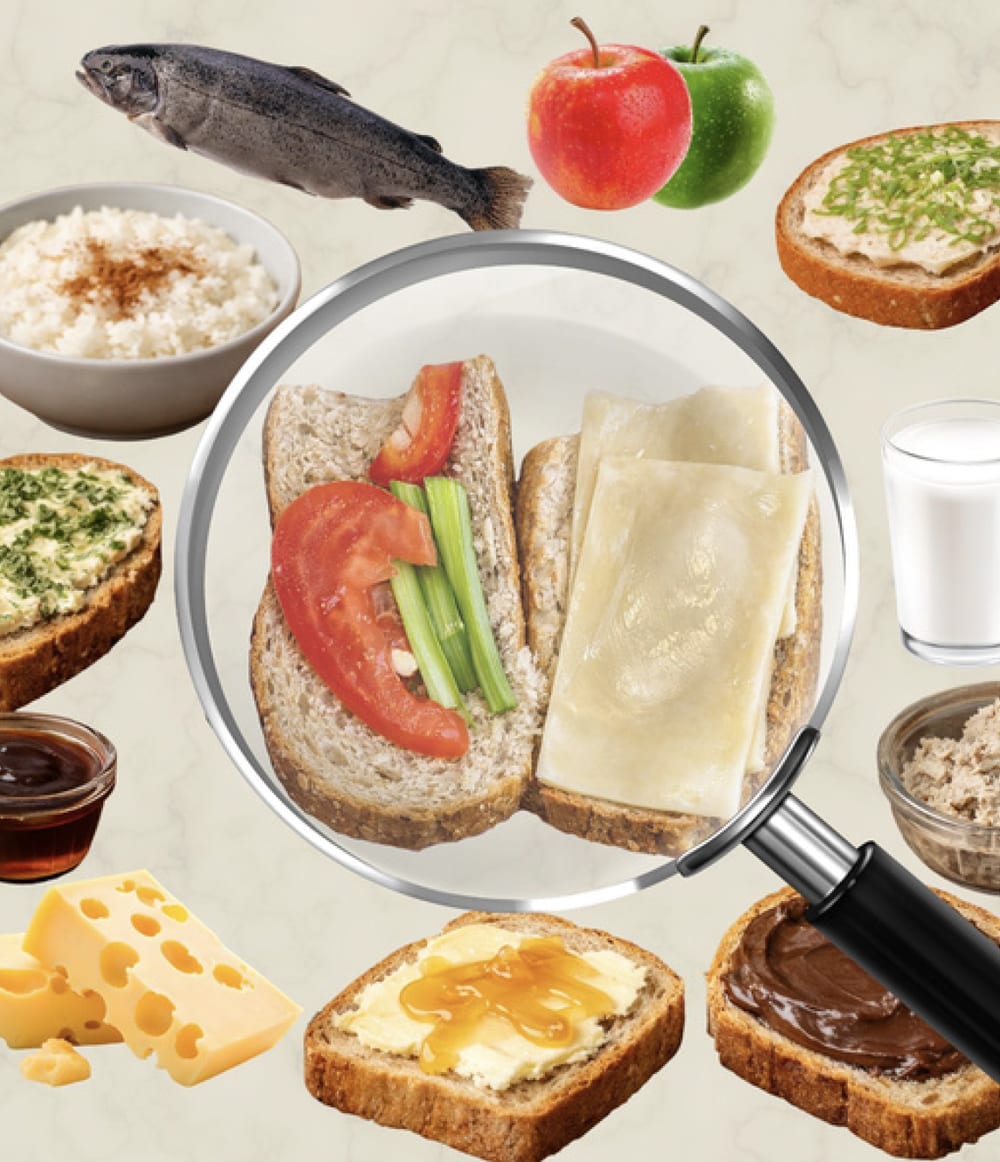
Without a shadow of doubt, I assert that the morning snack offered to students at the Jezersko branch school on sports day was in accordance with the Guidelines. It contained all important food groups and included two different types of vegetables, which are too often a missing part of the meal in school lunches.
The calculation of nutritional value in the national tool Open Platform for Clinical Nutrition (OPKP) showed that those children who consumed the sandwich covered 20% of their daily energy needs. Simply put, if the children ate the sandwich, they easily waited for the next meal.
CHILDREN'S NUTRITION AS A SHARED TASK
If we want to improve the health of future generations, we must strengthen mutual cooperation and trust. This is especially true for the area of children's nutrition. National data [3] clearly show that children and adolescents often do not consume enough vegetables and whole foods, and dietary habits are often far from recommendations. Schools and kindergartens have an important but challenging role in this.
It is extremely encouraging that the sandwich was prepared in the school kitchen. This is often a better choice than pre-packaged sandwiches, which usually have a less favorable nutritional composition, as they contain more different spreads rich in saturated fats.
As parents, we have a responsibility to support balanced nutrition in schools and kindergartens. School nutrition enables children to have regular, diverse meals and contact with a variety of foods, which is crucial for forming healthy eating habits. This is a process that requires time, patience, and cooperation from all involved.
Let's not get caught up in finding faults in individual cases. Instead, let's highlight good practices so that those who have more room for improvement will follow.
Sources and literature
School Nutrition Act (ZŠolPre-1). 2013, Official Gazette of the Republic of Slovenia: Slovenia.
ZRSŠ, Guidelines for Nutrition in Educational Institutions. 2024: Ljubljana.
Gregorič, M. et al., Various aspects of nutrition of the population of Slovenia: aged from 3 months to 74 years. 2019: National Institute of Public Health.